The most difficult part of parenting for young children arrives when toddlers throw their tantrums. Nearly every father and mother who visits the Pediatric Newborn Clinic will ask the same question about their child. The reality shows that tantrums occur as expected in toddler development. When parents handle tantrums, they experience stress because they lack preparations and their emotional resources have been used up.
This blog assists parents by explaining tantrum behavior through a child’s viewpoint so they can handle these situations with peace and self-assurance while keeping their daily life stress free.
What Are Toddler Tantrums, Really?
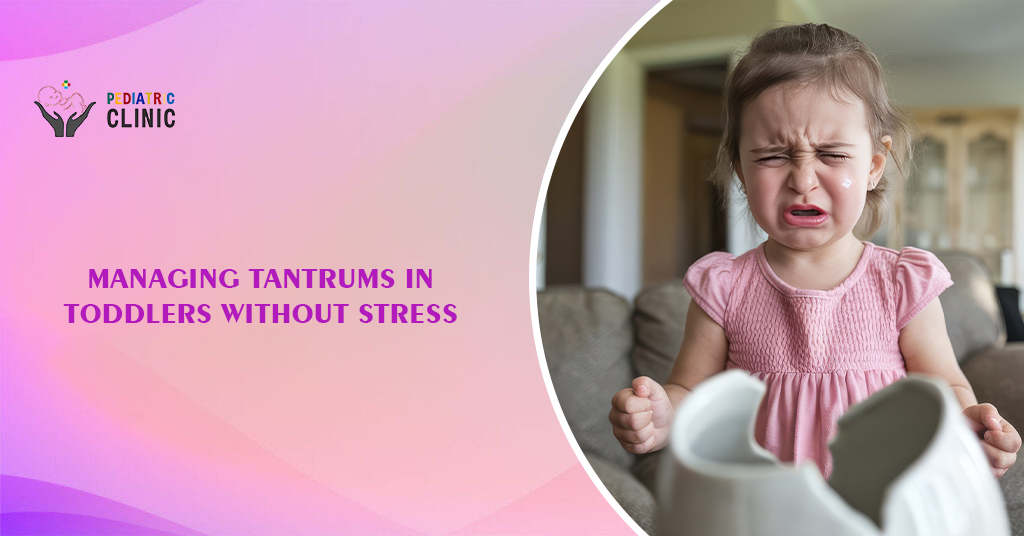
A toddler uses a tantrum to express their feelings which they cannot yet say in words. A child uses a tantrum to express the emotions that they cannot yet say through words. Toddlers experience powerful emotions, yet they only possess basic language abilities. When they experience frustration, tiredness, hunger, excessive sensory input, or feeling misunderstood, they express their emotions through crying, shouting, throwing things, or falling down on the floor.
Pediatric Newborn Clinic staff members teach parents that children show their emotional progress through tantrum outbursts. Your child shows their independence while testing limits and developing their personal identity. This stage begins at approximately 1.5 years and reaches its highest point between 2 and 3 years
Also Read:
- How Lifestyle Has Changed Kids’ Health Completely
- Why Is It Important to Have a Pediatrician?
- Track Your Baby’s Growth and Development
- Choose the Right Pediatrician for Your Child
Why Tantrums Feel More Intense Today
The current way people live their lives has resulted in rising tantrum incidents which have become more complex to handle. The combination of busy schedules and sleep pattern disruptions and excessive screen time and restricted outdoor activities leads to problems with emotional control in toddlers. Children today experience nonstop stimulation which prevents them from developing abilities to manage their feelings in a composed manner.
The level of stress that parents experience today has increased compared to previous times. The process of a parent trying to soothe an overstimulated toddler who has become tired leads to increased stress for both parties. The first step to handle tantrums with success requires people to understand how this cycle functions.
Common Triggers for Toddler Tantrums
Tantrums rarely come out of nowhere. Toddlers show their needs through basic needs which they cannot express in clear language. Children experience emotional outbursts when they become hungry or when they cannot sleep or when their routine suddenly changes or when they become sick or when people stop paying attention to them.
The Pediatric Newborn Clinic observes that toddlers who do not sleep well or miss meals tend to have more frequent tantrum episodes. The process of identifying these triggers enables parents to stop many tantrum episodes from initiating.
How Parents Can Respond Calmly During a Tantrum
The way a parent responds during a tantrum shapes how quickly it settles. Yelling and making threats or giving in right away will stop the tantrum for a short time between these two methods. A person who stays calm establishes better results than others who approach the situation differently.
The adult should stay close to protect the child while speaking softly to provide comfort. The adult should avoid providing detailed explanations about their situation which occurs during their tantrum. When toddlers experience overwhelming situations their ability to think logically becomes lost. The child will feel safe through simple phrases which include “I am here” and “You are safe”.
The Pediatric Newborn Clinic teaches parents to understand that their calm nervous system exists as a tool for controlling their child’s emotional responses.
What Not to Do During Toddler Tantrums
Your child experiences stronger emotional distress when you completely ignore them or respond through punishment. Physical discipline and shouting and public embarrassment lead to trust violations which prevent people from learning how to control their emotions. The practice of giving in to all demands under tantrum situations shows toddlers that they can achieve their goals through screaming.
People need to maintain equilibrium because they should treat others with respect while also showing understanding of their current feelings. The process of treating emotions requires recognition of their presence but organizations need to avoid giving rewards for destructive conduct.
Preventing Tantrums Through Daily Routine
A predictable daily routine reduces emotional overload. Regular meal timings, adequate sleep, and structured playtime help toddlers feel secure. Children thrive on predictability, even if they cannot express it.
Limiting screen time, encouraging outdoor play, and allowing free movement during the day help toddlers release pent-up energy naturally. Parents visiting Pediatric Newborn Clinic are often surprised by how much tantrums reduce once sleep and routine are corrected.
Teaching Emotional Expression Early
Toddlers benefit when parents help them name emotions. Saying things like “You are feeling angry” or “You look sad” teaches children that emotions are normal and manageable.
Over time, toddlers learn to express feelings with words instead of actions. This emotional coaching lays the foundation for better communication and self-control in later years.
When Tantrums May Need Medical Guidance
While tantrums are normal, excessive or extreme behaviour may need professional attention. If tantrums are violent, last very long, occur many times daily, or are accompanied by delayed speech, poor eye contact, or developmental concerns, a pediatric consultation is recommended.
At Pediatric Newborn Clinic, we assess not just behaviour but the child’s overall development, sleep, nutrition, and emotional environment before advising parents.
Supporting Parents Through the Tantrum Phase
Parenting a toddler is emotionally demanding. Feeling overwhelmed does not mean you are failing. Seeking guidance early prevents burnout and strengthens parent-child bonding.
At Pediatric Newborn Clinic, our goal is to support both the child and the parent, helping families navigate developmental phases with confidence and clarity.
Conclusion
The period of toddler tantrums serves as a vital emotional development phase which eventually ends. The process of emotional regulation instruction becomes possible through the combination of patient handling and established daily routines and compassionate understanding. Parents who maintain their emotional stability through calm responses and routine upkeep and immediate pediatric help, can handle tantrums successfully. Every child outgrows tantrums, but the emotional lessons learned during this phase stay for life.
Frequently Asked Questions (FAQs)
1. Are toddler tantrums normal?
Yes, tantrums are a normal part of emotional and developmental growth in toddlers.
2. At what age do tantrums usually peak?
Tantrums commonly peak between 2 to 3 years of age and gradually reduce as communication improves.
3. Can poor sleep increase tantrums?
Yes, sleep deprivation is one of the most common triggers for frequent and intense tantrums.
4. Should parents ignore tantrums completely?
No, acknowledging emotions while maintaining boundaries is more effective than ignoring or punishing.
5. When should parents consult a pediatrician for tantrums?
If tantrums are severe, frequent, violent, or associated with developmental delays, a pediatric consultation is advised.