Parents usually don’t wake up one morning thinking, “Something is wrong.” It begins quietly.
A missed response when you call their name.
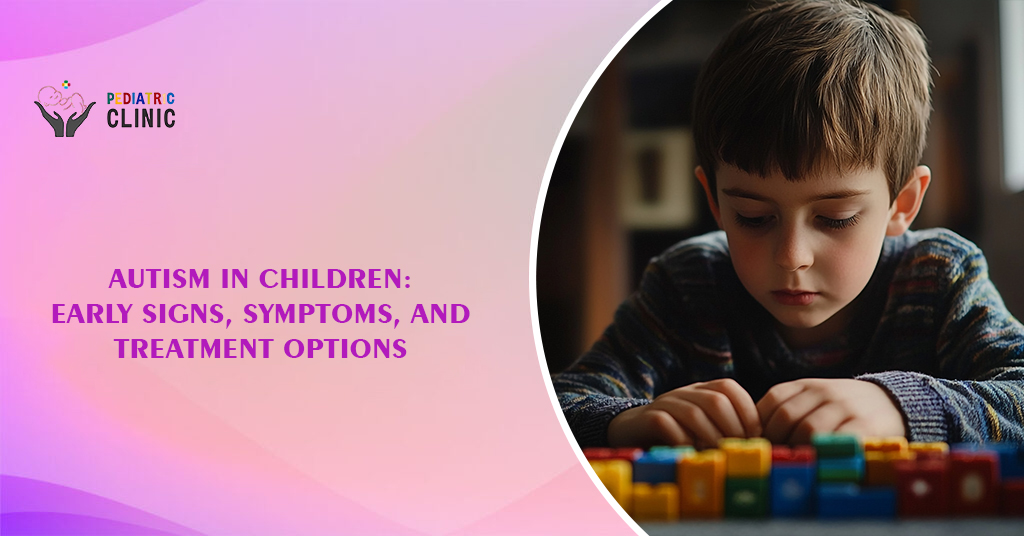
A child who prefers spinning the wheels of a toy car instead of playing with it.
A toddler who speaks very few words while other children the same age chatter constantly.
Most of the time, families come to the clinic not with certainty — but with a feeling. A doubt. A small question that refuses to go away.
Autism is one of those topics surrounded by confusion, fear, and a lot of misinformation. Let’s clear that up in a simple and honest way.
Also Read:
- Managing Tantrums in Toddlers Without Stress
- How Lifestyle Has Changed Kids’ Health Completely
- Why Is It Important to Have a Pediatrician?
- Track Your Baby’s Growth and Development
- Choose the Right Pediatrician for Your Child
Autism, or Autism Spectrum Disorder (ASD), is a developmental condition. It affects how a child communicates, connects socially, and responds to the world around them. It is called a “spectrum” because children can show very different patterns. One child may struggle mainly with speech. Another may speak fluently but find social interaction difficult. Some need mild support. Others require structured, long-term assistance.
There is no single “autism look.” And there is no single cause.
The Early Signs Parents Often Notice First
In clinical practice, the earliest concerns usually show up before three years of age. Sometimes even earlier.
One of the first signs families mention is limited eye contact. Babies naturally look at faces. They observe expressions. They seek connection. When that back-and-forth interaction feels reduced, parents sense it.
Another common concern is delayed speech. If a child is not using single words by around 16 months, or not forming simple phrases by two years, it deserves attention. Speech delay alone does not mean autism. But when it comes along with social withdrawal or repetitive behaviors, evaluation becomes important.
Not responding to their name is another sign. Parents often say, “It feels like he doesn’t hear me.” Hearing tests come back normal, yet the child does not consistently respond when called.
Then there are repetitive behaviors. Hand flapping. Rocking. Lining up toys in straight rows. Spinning objects over and over. All toddlers repeat actions sometimes. The difference lies in intensity and frequency.
Some children show strong reactions to sensory input. Loud sounds may cause distress. Certain fabrics feel unbearable. Bright lights become overwhelming. These are not tantrums — they are neurological responses.
What matters most is not one isolated behavior. It is a pattern.
As Children Grow, The Differences Become Clearer
By the time a child reaches preschool age, social gaps may become more noticeable.
They may avoid group play.
They may not understand sharing.
They may struggle to interpret facial expressions or emotions.
Language can also present differently. Some children repeat phrases exactly as they hear them — from cartoons or conversations. This repetition, called echolalia, is common in autism.
Routine often becomes extremely important. A slight change in schedule may lead to distress. Predictability provides comfort and safety.
At the same time, many children with autism show remarkable strengths. Deep focus. Strong memory. Extraordinary attention to detail. Some develop intense interests in numbers, letters, maps, music, or mechanical objects.
It is important to understand — autism is not defined only by limitations. It also includes unique abilities.
How Diagnosis Actually Happens
There is no blood test that confirms autism. No scan that gives a yes or no answer.
Diagnosis is based on developmental observation.
Pediatricians track milestones — speech, social engagement, play behavior, motor skills. If something appears delayed or different, further developmental assessment is recommended.
At Pediatric New Born Clinic in Greater Noida West, developmental screening is a routine part of child check-ups. If concerns arise, children may be referred for structured evaluation by specialists trained in developmental pediatrics.
An early diagnosis is not a label. It is access to support.
Treatment: What Really Helps?
Autism cannot be “cured.” But early therapy can significantly improve communication, behavior, and independence.
Behavioral therapy — especially structured early intervention programs — helps children learn skills step by step.
Speech therapy supports language development. For children who are non-verbal, therapists may introduce communication boards or assistive devices.
Occupational therapy focuses on daily activities — dressing, eating, writing — and also helps manage sensory sensitivities.
Educational planning is equally important. Many children attend mainstream schools with support plans tailored to their needs.
Parents are not bystanders in this process. They are central. Guidance, counseling, and practical training help families support progress at home.
Early intervention works best because the young brain is adaptable. The earlier support begins, the better the long-term outcomes.
What Causes Autism?
Research suggests that autism develops due to a combination of genetic and neurological factors affecting early brain development.
It is not caused by vaccines.
It is not caused by parenting style.
It is not caused by diet or emotional environment.
Blame does not belong in this conversation.
Understanding does.
A Different Developmental Path — Not A Hopeless One
Many adults with autism live independent, meaningful lives. Some become artists, engineers, researchers, musicians, entrepreneurs.
Autism does not remove potential. It changes the pathway.
For parents, the hardest part is uncertainty. But seeking evaluation early does not mean you are expecting the worst. It means you are choosing clarity.
If something feels different about your child’s development, trust that instinct. A simple screening can provide reassurance — or direction.
At Pediatric New Born Clinic in Greater Noida West, the goal is not just diagnosis. It is partnership. Families are guided carefully, without panic, without judgment, and without pressure. Because every child develops in their own rhythm.
And every child deserves support that respects who they are.
Frequently Asked Questions
1. What is the earliest age autism can be identified?
Some signs may appear as early as 18 months. Many children receive a diagnosis between 2 and 4 years.
2. Does delayed speech always mean autism?
No. Some children simply have speech delay. However, when speech delay occurs alongside social or behavioral differences, evaluation is recommended.
3. Can children with autism improve over time?
Yes. With early and consistent therapy, many children show significant progress in communication and daily functioning.
4. Are vaccines linked to autism?
No. Extensive global research has shown no connection between vaccines and autism.
5. Should I wait and see if my child “catches up”?
If you have concerns, it is better to seek screening early. Early intervention provides better outcomes than delayed support.