
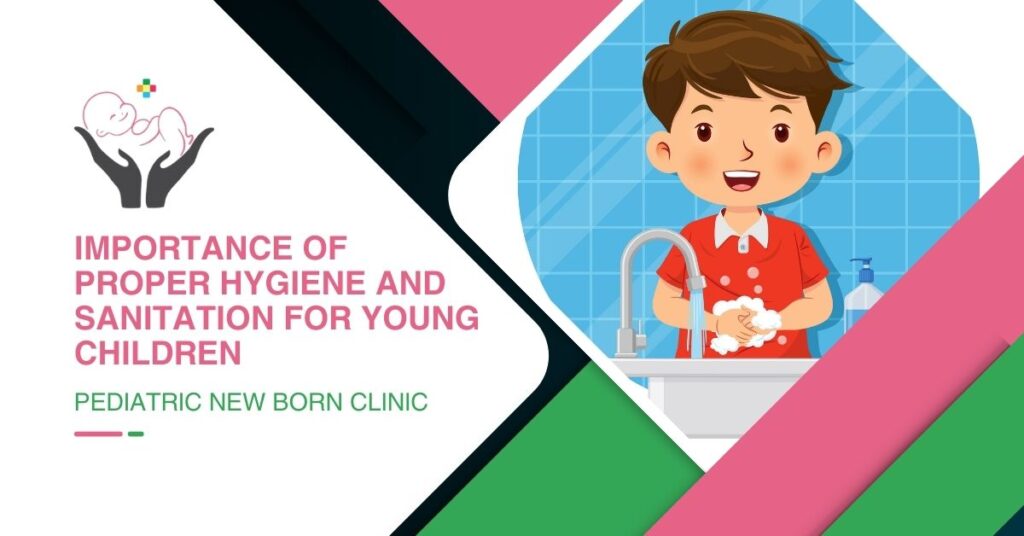
In today’s time the health is now becoming a major issue and this mainly affects children because of their unhygienic and poor sanitation by which kids get ill and that causes an effect on education and physical ability to do work and now these things become a major concern for parents in part of responsibilities.
At Pediatric Newborn Clinic, we often emphasize that instilling hygiene practices early not only reduces the risk of common illnesses but also guides children essential life skills.
Hygiene and Sanitation in Children
Young children’s immune systems are still developing, making them more vulnerable to infections and disease. Poor sanitation and hygiene can lead to frequent illnesses such as skin rashes, respiratory infections, diarrhoea, and even more serious conditions.
Early hygiene education benefits for kids in the following ways:
- Develops an effective immune system
- Minimise the chances of getting sick and infected
- Set up healthier daily habits
- Grow in social awareness and accountability
At Pediatric Newborn Clinic, we regularly counsel parents that good hygiene is essential for growth and health that goes beyond simple cleanliness.
Hand Hygiene: The first Line Of Defense
As we know that hand hygiene is the most crucial thing because from hands only your body depends to work as wellness. Children constantly touch anything like toys, chairs or any dusted area without knowing that they eat with the same hands which leads to infections in children.
Some hand hygiene guidelines for kids are set forth:
- Teach Proper Hand-Washing Techniques
- Using clean water and liquid handwash should be the first step toward good hygiene and sanitation.
- Rub at least 10-20 seconds with handwash covering everything including fingers and under nails.
- Rinse well and dry hands using a clean towel or aggressive tissues.
- Use child-friendly hand sanitizers whenever soap and water are not available:
Alcohol-base sanitizers (min. 60% alcohol) are effectively germ killing but children should be used with parental supervision.
Teach children to wash their hands at critical moments:
- Before and after meals
- After using the toilet
- After playing outside or with pets
- After coughing or sneezing
Children just find it boring, but parents should try some tricks like colorful handwash or creative cartoon sanitizers or any sort of free experience activities about handwashing so that children get engaged and comply with these feeble acts from their life.
Bathing and Personal Hygiene
Nowadays children are becoming lazy in terms of bathing and hygiene but mostly children skip bathing due to which the infection and illness take place in their body.
Regular baths help remove dirt, sweat and bacteria and reduce the risks of skin infections.
Tips for effective bathing are as followed:
- Bathe infants 2-3 times a week and toddlers daily or every alternate day, depending on activity level.
- Use mild, children-friendly soaps or body washes to prevent skin irritation.
- Nail care includes trimming of nails regularly and avoiding biting nails.
- Hair care involves 2-3 times washing with children’s friendly shampoo.
Toilet and Hygiene and Diapering
As we know the children’s main irritation happens due to not changing diapers, sweating and not taking care of public washroom guides which cause health damage.
- Teach children to wipe properly from front to back to prevent infections.
- Encourage handwashing immediately after using the toilet.
- For infants, change diapers frequently (every 2–3 hours) to prevent diaper rash.
- Use gentle baby wipes and mild diaper creams for sensitive skin.
Potty training should be approached gradually, making hygiene habits fun and encouraging independence.
Common Mistakes to Avoid
Simple mistakes by parents often affect their child´s hygiene:
- Using highly alkaline soaps and chemicals for delicate skins.
- Being negligent about oral hygiene before 2 years of age.
- Not washing toys, bedding, and clothes regularly.
- Rushing through potty training without setting focus on proper hygiene.
Avoiding those mistakes would be a better way of ensuring health (and thereby illnesses) on the child.
When to Seek Medical Advice
Even when children maintain good hygiene, they have losses of getting infections. In case a child has:
- Persistent fever or diarrhea
- Unusual skin rashes or infections
- Repeated urinary infections
- Oral/dental issues worsening
Seek medical advice at Dr. Amandeep’s Pediatric Clinic in Greater Noida West. Early intervention can stop potential health risks from turning into major issues.
Conclusion
Teaching kids the value of hygiene and sanitation is an important step towards lifelong health. From hand-washing to oral care, safe food handling, and clean surroundings, these small daily habits because much into profitable for one’s child’s well-being. At Pediatrics Newborn Clinic in Greater Noida West, we advise parents on easy and practical age-appropriate hygiene routines for kids. By following these guidelines, parents can make sure their children grow up to be healthy, happy, and resilient.

